
Arrest Warrants in El Paso County
Texas Code of Criminal Procedure art. 15.01 defines an arrest warrant as a written order from a magistrate. It directs a peace officer or another named person to take the accused into custody. In El Paso County, several judicial officers fill that role. District judges, county judges, JP judges, municipal judges, and jail magistrates may all act, depending on the case. The facts come from a sworn complaint or affidavit. A magistrate reviews it, must find a lawful basis, and signs the process with the required identifying details. Keep one limit in mind. A public warrant search is not the affidavit and never replaces the judge or clerk's record.
El Paso County Magistrates Review Sworn Complaints
Texas law sets what a warrant must say. The order identifies the accused by name or a reasonably definite description, states the offense, and carries the magistrate's signature and office. The supporting complaint fills in the rest. It gives the offense belief, the time and place, and the affiant's signature. These details help a clerk find the right file when names are similar. In El Paso County, the paperwork splits by case level. Felony pleadings route through the District Courts and the District Clerk. Adult misdemeanor files go to the County Clerk's Criminal Division. JP and municipal courts handle lower-level cases. For the actual affidavit and current bond, the issuing clerk, not a general search form, is the right source. The controlling warrant rules are in the Texas Code of Criminal Procedure, Chapter 15.
El Paso Arrest Warrant Details
Ask for the case and service details in one request. The warrant, complaint, bond order, and docket may sit in different parts of the El Paso County court file. There is no public sample number format here. Don't guess a warrant number from a cause number.
| Warrant number | The District Clerk coordinates warrant numbers, but no public format sample was located. Confirm the exact identifier |
|---|---|
| Named subject | Name and a definite description, with protected identifiers handled under law. |
| Charge / offense | Offense named in the process and supporting complaint or affidavit. |
| Issuing judge / court | Magistrate's name and office, plus the court that controls the case. |
| Bond / bail | Amount and type set for that case; confirm holds and release conditions. |
| Dates | Issue, execution, return, or recall dates, when the public record may disclose them. |
El Paso County Access After Service
A warrant and its supporting affidavit become public under Texas art. 15.26 once the warrant is executed. Before execution, the picture differs. A sealed indictment or investigation-sensitive affidavit may not appear in a public docket. Government Code §552.0035 sends questions about judiciary-collected information to court rules or other applicable law, and §552.108 can protect investigative law-enforcement information. When you request a file in El Paso County, name the court and cause number if you know them. Ask for existing records. Let the clerk redact protected portions. A denied or partial response does not establish that no warrant exists. Juvenile warrant records follow a separate confidentiality rule.
Access rule: An executed process may become public while an unserved or sealed record remains unavailable; confirm status with the issuing clerk.
How Arrest Warrants Are Served
The Sheriff's Fugitive Warrants and Apprehension Unit executes criminal and traffic warrants. It also handles extraditions. Extradition orders and state or nationwide process fall to it too. Constables serve process in their assigned roles. City police and municipal warrant officers handle local warrants. Horizon detectives also generate and execute arrest and search warrants. After an arrest, Texas law requires the person to go without unnecessary delay before the issuing or another authorized magistrate. El Paso County's Jail Magistrate Court at 600 E. Overland handles initial warnings, probable-cause review, and bond. Local warrant sources promise no blanket release or hearing time. The county's Jail Magistrate page identifies the initial custody and bond contact.
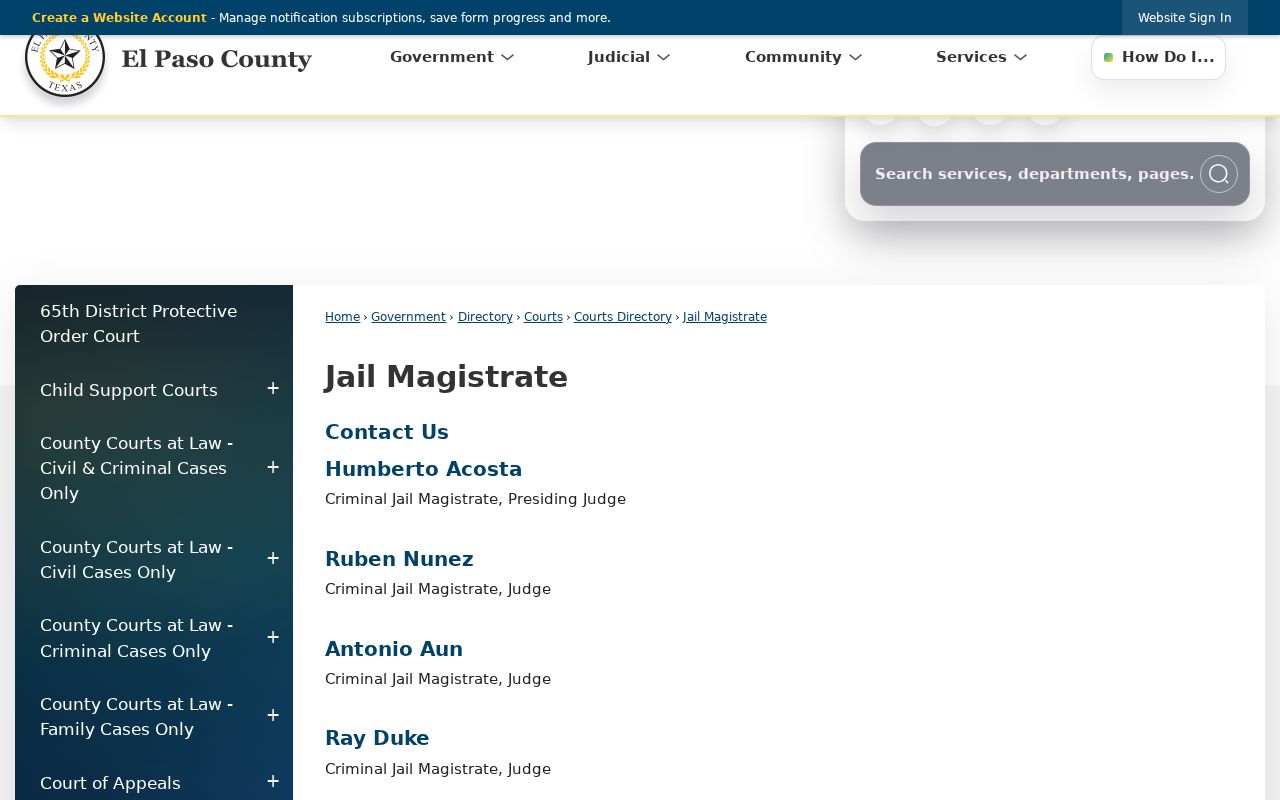
Call the listed office before visiting to confirm the right location and required paperwork.
El Paso County Jail Magistrate Reviews Custody
After an arrest, the person must go without unnecessary delay before the issuing or another authorized magistrate. El Paso County's Jail Magistrate Court at 600 E. Overland handles initial warnings, probable-cause review, and bond. That first custody review has limits. It does not decide the underlying charge. It also cannot recall another court's warrant. The county Jail Magistrate page identifies the local office, and the clerk of the issuing court can provide the signed order or supporting affidavit.
El Paso County Felony Files
The El Paso County District Clerk's Criminal Division holds adult felony pleadings and coordinates warrant numbers. It sits at 500 E. San Antonio, Suite 103. Its main phone is 915-273-3534. Send felony file requests there. Adult misdemeanor records belong to the County Clerk's Criminal Division instead. Neither clerk can give legal advice. Neither can promise that a public index shows a sealed matter. For Sheriff execution questions, use the warrant line. For the signed order, affidavit, or docket, ask the court clerk. The District Clerk's official page publishes its criminal-record and warrant-number contact details.
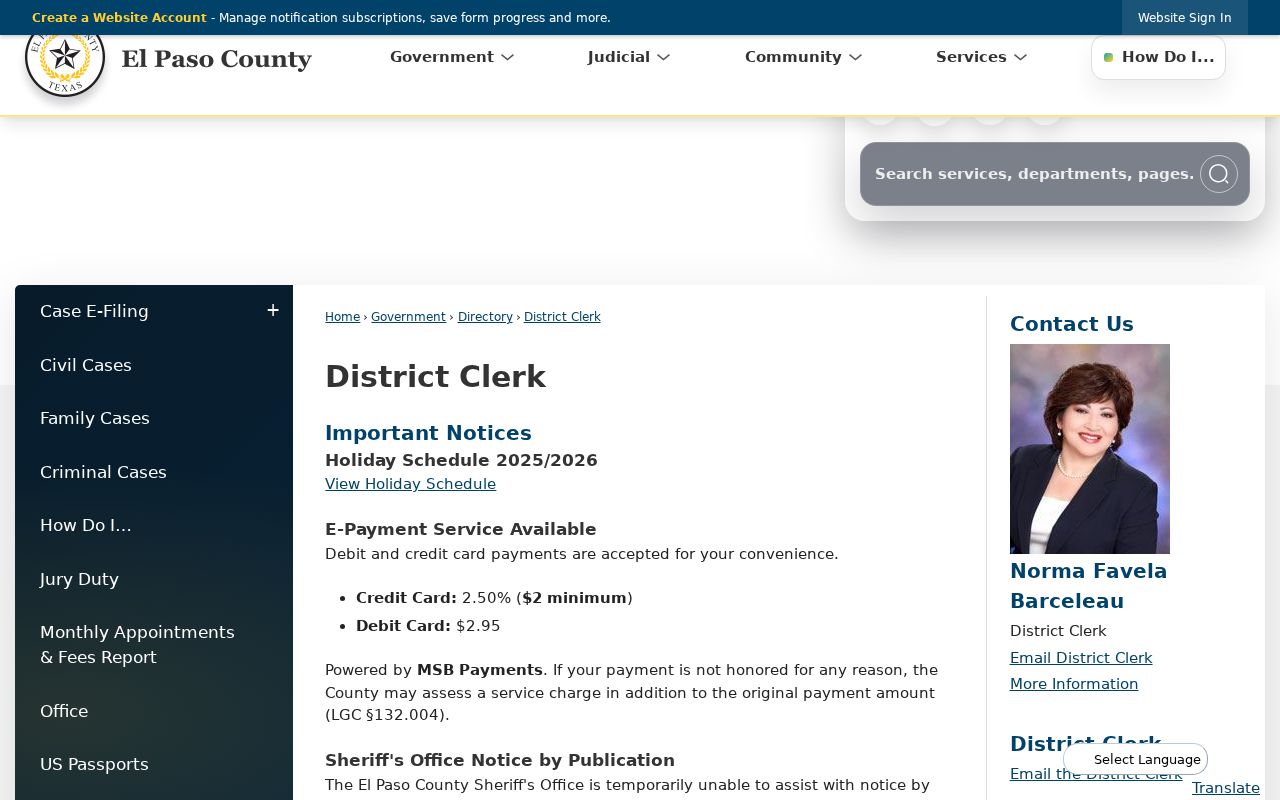
Send the felony request to the District Clerk, since that clerk keeps the El Paso County case file.
Arrest Warrant vs Summons vs Bench Warrant
Each paper does a different job. An arrest warrant authorizes custody on probable cause, while a summons just directs a person to appear without an arrest first. A bench warrant in El Paso County follows a missed setting or another failed court obligation in an existing case. The issuing judge or magistrate sets the allowed response.
| Feature | Arrest Warrant | Summons | Bench Warrant |
|---|---|---|---|
| What it orders | Officer takes the accused into custody | Person appears at the stated court date | Arrest or return to court after noncompliance |
| Basis | Probable cause and authorized process | Court's decision to require an appearance | Missed date, contempt, or violation of an order |
| Who issues it | Judge or magistrate | Court or authorized officer | Judge in the existing case |
| How to respond | Confirm, consult counsel, ask about bond | Appear as instructed | Ask the issuing court about reset or recall |
Federal Warrants Use a Separate Court
Federal warrants never run through county court in El Paso County. They belong to the Western District of Texas, El Paso Division, under federal rules. Its warrant-application procedure gets government-side review, and it may include a request to seal or restrict disclosure. There is no public self-check form at that level. PACER and RECAP can show public docket filings, though neither works as a general warrant database. The U.S. Marshals Service executes federal arrest warrants, often with agency partners. A Texas county clerk cannot recall a federal warrant, and the Sheriff's local name form may miss a sealed federal matter. For a confirmed federal case in El Paso County, rely on counsel and the issuing federal court. The Western District's official site lays out the El Paso Division and its public court access.
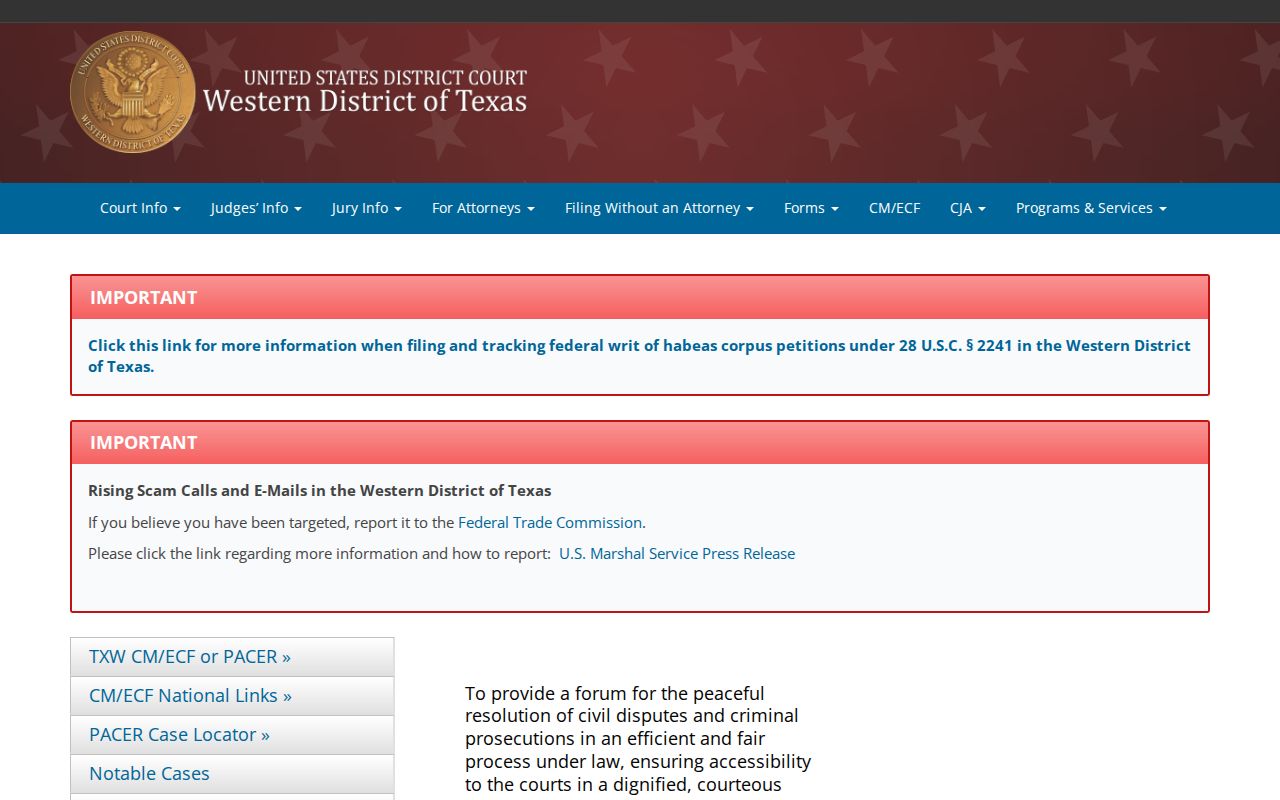
Federal cases skip El Paso County court and the city system entirely. The court also publishes a separate procedure for electronic warrant applications.
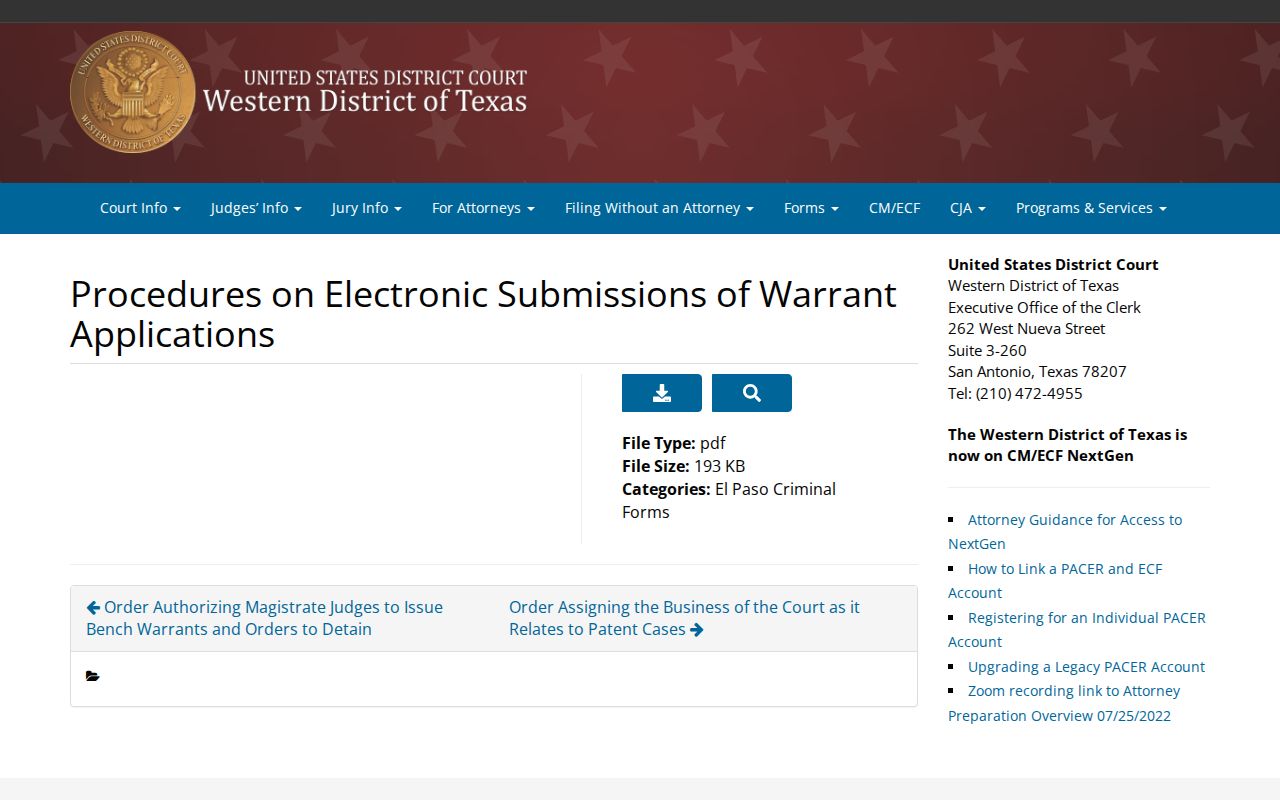
The application procedure is for authorized government users, not a public name search.
What to Do If There Is a Warrant for You
Think a warrant names you? Confirm it with the Sheriff's warrant line and the issuing court before anything else. A lawyer can call the judge's coordinator, check bond and any holds, and arrange a walk-through or voluntary surrender. Counsel can also ask whether a motion to recall or quash the El Paso County warrant fits your situation. Clearing the warrant does not close the underlying case, which stays open on its own track. Never assume a municipal payment clears a felony process. Keep the receipt, and ask the court for a docket entry or a written status update. County booking and court counters are separate, so call first and let the right office explain where and how to appear.
Important: Talk with an attorney before surrendering or posting money; an active arrest warrant can lead to custody during later contact with law enforcement.