
Bench Warrants in El Paso County
A bench warrant is a judge's order tied to a court obligation. In El Paso County, common triggers include missing a required appearance, failing to follow a payment plan or community-service order, contempt, or not appearing after a bond. Family-court and child-support process follows its own court route.
Local labels vary. Socorro separates a failure to appear from a capias pro fine and from a “violate promise to appear” charge. El Paso Municipal Court may describe its process as an arrest warrant after a citation date. Ask the clerk for the exact order and the case it belongs to.
Socorro Treats Remote Hearings as Required
Socorro Municipal Court says hearings other than jury trials are virtual, and a scheduled remote appearance is not optional. Missing it carries the same consequence as missing an in-person setting. The court also lists FTA as a separate intentional or knowing failure to appear, while a capias pro fine follows failure to comply with a judge's order or show-cause process.
Residents can call 915-872-8574 for warrant information and payment options. The same court page describes citation lookup by citation number, driving-license number, or personal information, but it does not expose a separate public warrant-result table. Use the court coordinator, not a generic county search, to confirm a Socorro case.
How an El Paso County Bench Warrant Is Issued
The issuing judge decides whether a missed obligation warrants process under the case and applicable law. The resulting order authorizes an officer to take the person into custody or bring them before the court. A capias pro fine is different: it enforces a judgment or unpaid fine after the case has already reached that stage.
There is no single public Texas warrant portal. A local case may appear in the Sheriff's own search, a city docket, or a JP record. The issuing court controls a reset or recall, while the Sheriff, constable, city police, or another peace officer may serve the warrant.
El Paso County Capias Is Separate
Do not treat every missed-date warrant as the same order. A bench warrant follows a court appearance or compliance failure; a capias may follow an indictment or judgment; a capias pro fine addresses a fine or cost after judgment. Socorro's published definitions make these distinctions visible in its local court vocabulary.
| Term | Typical local trigger | First call |
|---|---|---|
| Bench / FTA warrant | Missed setting, contempt, or failure to obey a court order | Court that scheduled the appearance |
| Capias | Indictment, judgment, or other statutory event | Issuing clerk or judge |
| Capias pro fine | Unpaid fine or failure to comply after judgment | Financial Recovery or the issuing court |
Bench Warrant vs Arrest Warrant
A bench warrant responds to a court obligation; an arrest warrant authorizes custody based on probable cause of an offense. Both can result in an arrest, but the source and first office to call differ. The assigned judge or magistrate signs process, while a peace officer executes it.
| Feature | Bench Warrant | Arrest Warrant |
|---|---|---|
| Trigger | Missed date, contempt, or noncompliance | Probable cause to believe an offense occurred |
| Who Issues It | Judge handling the existing case | Judge or magistrate after authorized process |
| Underlying Case | Usually a pending case or court order | Complaint, affidavit, or indictment process |
| How It Clears | Reset, appearance, recall, or quash | Bond, appearance, surrender, or court action |
El Paso County Capias Recall by Phone
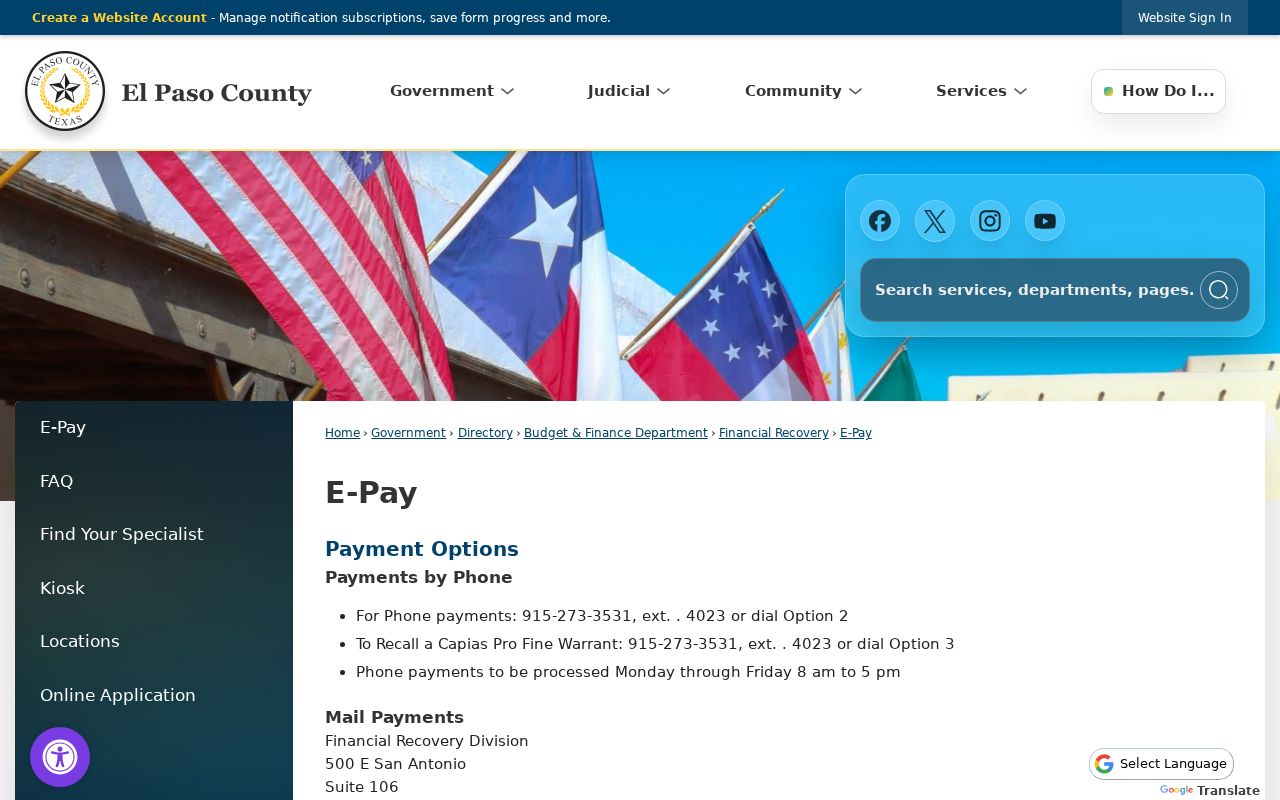
For a county capias pro fine, El Paso County's Financial Recovery Division publishes a menu option for “Recall a Capias Pro Fine Warrant” at 915-273-3531, option 3. That is a focused phone route, not a general recall form for every bench warrant. Ask which court entered the judgment and what must be paid or presented.
The county E-Pay page describes payment categories and counter rules. It accepts certain in-person payment types and warns against mailing cash. Do not use the capias path for a new arrest warrant or a city case without first checking with the issuing court.
The county E-Pay page identifies the capias recall option.
Keep the case number on a payment and ask the court to confirm the warrant status after it processes.
How to Resolve a Bench Warrant
Start with the court and the exact warrant label. Ask whether the judge will reset the setting, take a voluntary appearance, accept payment, or consider a motion to recall. A lawyer can contact the court and coordinate a walk-through or surrender where appropriate. Bond is case-specific, and El Paso County publishes no single schedule.
- Call the issuing court with the cause, citation, or case number and ask whether the warrant remains active.
- Ask a Texas attorney whether to request a reset, recall, quash, or planned surrender.
- Confirm the correct courtroom, remote or in-person rules, and any bond or payment condition before appearing.
- Resolve the missed setting or underlying obligation, then request a receipt or docket entry showing the court's action.
Caution: Do not assume a missed-date warrant has expired; ask counsel and the issuing court about a safe appearance plan and any remaining case duties.
El Paso County Bench Bond Varies
The county research found no single bond schedule for every bench warrant. The issuing judge or magistrate sets the amount, allowed type, and any appearance condition for that case. A Sheriff's name-search result may not show those terms, and a financial payment option for capias pro fine does not answer what is required on a missed-date warrant from another court.
Ask the clerk which court controls the case and whether bond, payment, a reset, or a planned appearance is the next step. If the record is unclear, have counsel confirm the case number before arranging a surrender.
El Paso County JP Warrants Follow Tickets
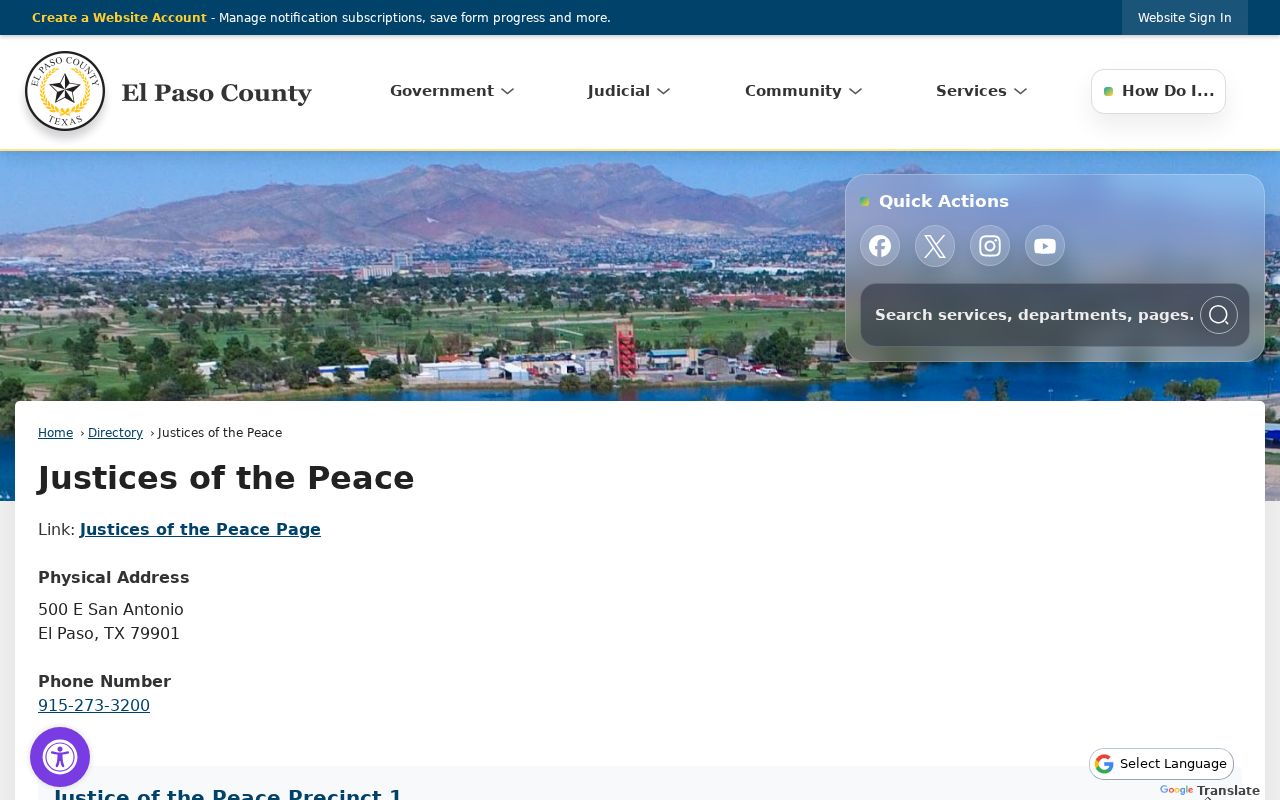
The county has eight JP places: Precincts 1, 2, 3, 4, 5, 6 Place 1, 6 Place 2, and 7. A citation from an agency other than El Paso Police should identify its precinct. Use that clerk's case and payment links, because a JP record may not appear on a city court portal or the Sheriff's name search.
For example, the county directory lists Precinct 4 at 2350 George Dieter, Suite A, with its own hours and coordinator. Check the live directory before visiting since hours differ by precinct.
The county JP directory presents separate counters and contact details.
Use the precinct printed on the ticket to choose the correct counter.
Which El Paso County Court Issued It
A bench warrant follows the court that set the appearance or issued the order. Felony matters route to the assigned District Court and District Clerk; adult misdemeanor cases go through the County or Criminal Court at Law and County Clerk; fine-only traffic and Class C matters belong to the JP or municipal court on the citation.
The Sheriff may confirm execution or booking details, but the court controls recall and rescheduling. If the court name is unclear, check the case record and call the clerk. For a city traffic case, the separate municipal court warrant channels identify the local court path.